Pages

Total Pageviews

Wednesday, October 17, 2012

The Internship Year


When I graduated in December 1949 it wasn't mandatory to spend a year doing a supervised internship before being granted a license to practice medicine independently – that became the law a few years later – but it was unusual for new graduates to go directly into practice.  I think only one of my classmates did so, joining his father and others in a small group practice. Adelaide followed the prevailing pattern of Australian medical schools and those in many other countries, with a system of rotating internships: new medical graduates moved through a series of supervised training positions usually at two-month intervals. All posts included general medicine, general surgery, many provided 1 or 2 months in ‘casualty’ – the emergency department – and some included anesthetics.  I had all these, and one month each of orthopedic and neurosurgery, infant care, and long term chronic care.  It was a good mixture of experiences but by no means the best. The ‘best’ rotations went to the top graduates, who had first preference among the clinical chiefs, that is, it was based on performance in the final examinations. I did well in all but one exam, my internal medicine ‘long case’ clinical (practical) exam, in which I failed to detect an elusive heart murmur. I passed that clinical examination by a hair’s breadth, and consequently graduated some 10-15 places lower than otherwise would have been my fate.   

I graduated well enough to get a reasonable rotation, not well enough to get the pick of the best of them. I was happy at the thought of being able to put behind me the long hours of study, and bewildered, even dismayed at the prospect of having to decide what I wanted to do, medically speaking, with the rest of my life. It was assumed that whatever else we did, most of us would first go into general practice, and I did that before the ink was dry on my medical degree certificate, working as a relieving GP in a country town about 50 miles north of Adelaide. It was a scary experience. On my first night in that practice, I had to deliver a baby, which went well enough; but then the placenta wouldn't deliver, and all the time the woman was bleeding, first a trickle, then more, then yet more and more until I began to worry. It was probably all perfectly normal, but I had never delivered a baby without somebody else standing by, and here in the labour room of a small country hospital, I was utterly alone - the duty nurse had gone off about her business, leaving me to fend for myself on a hot and sweaty night. It was my first medical "emergency," a self-made emergency. It ended safely in due course after what felt like hours, was actually less than an hour. It was the beginning of a stressful few weeks.

Another experience in that practice introduced me to medical ethics, on which we’d had a single lecture near the end of our final undergraduate year. The lecturer, an elderly former president of the state medical association, warned us against sexual involvement with our patients, told us we must never procure abortions, and gave us a tutorial on how to complete official documents like death certificates. That lecture didn’t prepare me to deal with a task my boss assigned me on my first day in the practice: I was to give a 40-year old woman daily injections of penicillin but warned on no account to tell her what the injection was or why she was getting it. She was having a course of penicillin because her husband, the mayor of the town and my boss’s golf-playing partner, had brought back some gonococci as a souvenir of a business trip.  She wasn’t stupid. The first time I saw her she asked me if I was giving her penicillin, and was it because her husband had given her a dose of the clap. I was truthful. I answered “Yes” to both questions.  All hell broke loose.  I was almost fired on the spot, saved only by the hard fact that my boss would not have been able to get a replacement for me, and was leaving next day for annual holidays.  I learnt the importance of telling patients the truth – a task my boss had failed dismally to perform.  I was young and inexperienced but I knew he was in the wrong and I was not.  It didn’t help but it did make me feel better.

My internship year was much like those of more eloquent writers than I who have devoted books to the subject of this rite of passage into the medical profession. We worked intensely hard, often going without sleep for a couple of days, getting rich and varied experience. I mastered several techniques: giving complex anaesthetics, inserting needles for intravenous sedatives into tiny veins on the back of the hand, even the back of the forefinger, passing endotracheal tubes, doing minor surgical procedures like removing sebaceous cysts, and common surgical operations like removing acutely inflamed appendixes, repairing simple inguinal hernias, reducing simple and compound fractures of the wrist, ankle, forearm; and the minor procedures of acute medicine - lumbar punctures, putting up intravenous drips, etc. I soon became competent at these technical procedures, and got better too at dealing with people, the part of the work I enjoyed most.

But I remained undecided about the ultimate direction in which I might move as my medical career unfolded into maturity. My experiences included both extremes of age: I started the year at the Mareeba Babies' Hospital, a semi-chronic care institution, full in those days of sickly infants with the mysterious condition called Pink Disease, not identified until some years later as mercury poisoning caused by ingesting mercury in teething powders. Later I had a month at the Magill Old Folks Home, a chronic care division of the Royal Adelaide Hospital, where the incurable, “boring,” elderly kinless were sent to die a lingering death. We all hated this posting, it wasn't “real” medicine, we had the perception that there was nothing we could do for these patients; all too often they died at night, and we had to get out of our warm beds, drive all the way out to Magill, and certify that they were really dead. How callous and uncaring we were! The highest aspiration that some of us who did that rotation could imagine was to find witticisms to add to the voluminous case-notes that had accumulated about many of the patients who had been there for years. Looking back now I cringe with embarrassment and guilt at my callousness and lack of compassion.  

In other ways the month at Magill was a time to relax, there were few emergencies and nobody harassed us, so we could enjoy the beer-sodden party life of the residents' quarters. We played as hard as we worked, much influenced by role models, registrars (senior residents) a few years ahead of us, who had themselves learnt how to live it up from their predecessors. We had the doubtful privilege of being influenced by some men of an older generation, who had been away at the war and had returned to the teaching hospital system to learn from those who would examine them for the higher examinations in medicine, surgery, obstetrics etc that were required before becoming bona fide consultant specialists. Some of these men were really wild, letting their hair down after stressful experiences during the war.  I had to treat one of them for an acute episode of malaria one memorable weekend (I made a blood film and saw for myself the malaria parasites and disintegrating red blood cells). He was on the way to a career in gynecology. Others were heading for internal medicine, or general or orthopedic surgery, having already done a great deal of war surgery; two who were our immediate seniors were younger surgical registrars who taught us how to drink beer, fry eggs in butter, spin dinner plates out the windows on the upper floors of the building where we lived (“Flying saucers,” we called these dinner plates as they broke with satisfyingly loud crashes, when they hit the ground or the building across the parking-lot if they glided far enough). One night two of them went into the Botanical Gardens that adjoined the RAH, swam under water in a duck-pond, and pulled down under the water a couple of mallards, drowning them before bringing them back for others of us to pluck and clean so they could be grilled over an open fire on the third floor veranda of the residents' quarters. They taught us also many dirty songs, and how to play billiards on the battered old table that had been part of the furniture in the residents’ quarters for generations. On another occasion, not during my time, some of them blocked the drain in one of the bathrooms, sealed the cracks in the door with putty, and filled the entire bathroom with water to window level, getting in to swim in the pool thus created through the window from the third floor balcony. All went well for a few days until the cleaners reported that they couldn't get into this bathroom, and had the door broken open. The resulting flood severely damaged the stored medical records on the ground floor of the same building... It was a long time before that episode was forgotten!

All but three of our immediate seniors were men. The demographic transformation had not yet struck the medical profession. My class was the first with an appreciable proportion of women and for some years it was the only one. Among our registrars (senior residents in modern terminology) there were 3 women, a neurosurgical trainee, an anesthetist and a woman heading against strong opposition into obstetrics and gynecology, at that time an exclusive domain of men. The modern male-female 50-50 balance in the medical profession was still some 10-15 years away in the future. Several women in my class were among those who began to shift the balance.

That year as hospital resident was the first time I had lived independently away from home, cutting the ties that had bound me tightly to my home and my possessive mother. Probably the bonds had been unusually strong because of the combination of my mother's personality and the break-up of her marriage. She had always been unwilling to let me go, always insisted on a detailed accounting for my every action whenever I came home after being out of her sight. The year at the Royal Adelaide Hospital began to liberate me from this relationship, which only then I realized was stifling me. I began to realize then that this relationship was one way in which I was different from my peers, all of whom had broken free from parental surveillance many years earlier, often while still in school. 

The experience of so many clinical rotations in the short space of a year did nothing to help me resolve the doubts I still had about what kind of doctor I wanted to be. I enjoyed and was good at many of the clinical tasks I had to carry out, perhaps most of all the fine manipulative skills that required proficiency with a needle or a scalpel. Yet I was sure I didn't want to be a surgeon. Equally surely, I didn't want to be a psychiatrist. In those days, mental disorders were disturbing to contemplate and mostly they were mysterious and frightening, a great gap in our clinical training. I didn't learn anything about mental and emotional disorders until several years after I went into general practice, consolidated the little I'd learnt by targeted experiences during my epidemiological training. If I lent towards anything, it was the obvious direction that almost all of us took, towards general practice. Yet I had much uncertainty about this too, partly because I lacked confidence in my ability to function on my own, partly because the field seemed to me to lack much intellectual stimulation. I still wanted most of all to be a writer.

Late in the winter of 1950, just after the Korean War began, I escaped for a two-week spell relieving a doctor in a country town about 150 miles north of Adelaide and enjoyed this experience of general practice much more than I had when I had briefly worked as a country GP just after graduating. Yet I didn't feel ready to embark upon a career in general practice at the end of the internship year at the RAH. Like most of us, I applied for a six-month period as house officer at the Adelaide Children's Hospital. I also considered enlisting, joining the Australian contingent that was preparing to deploy to Korea. I've sometimes wondered how differently my life might have turned out if I had served in that forgotten, unfinished war.

During 1950, along with all the others who lived in the residents' quarters at the Royal Adelaide Hospital, I had many close encounters with large numbers of cockroaches. The building was infested big time. If one of us went into the kitchen of our quarters late at night and turned on the light, the entire table top and the benches beside the sink were a moving carpet of purple or black carapaces, long antennae waved as if gusts of wind blew across them; they made a sinister sounding rustling noise but were otherwise silent, unlike some of us, especially the women residents who had been known to scream at first sight of them, although like the rest of us they soon got hardened to the sight. The largest of them were two or more inches long and if we could suppress our disgust at the sight, they were really rather beautiful with their shiny carapaces and long, gracefully waving antennae.  Ten years later when I was learning medical entomology during my public health training, the delightful expert who taught that component of the course told us two interesting things about cockroaches: they are scavengers that clean up organic waste, much as carrion birds in India dispose of rotting meat from animal carcases; and, surprisingly, they do not carry any human diseases.  Cockroaches, therefore, do not deserve the revulsion they arouse in so many of us. Years later in 1978-79 when we lived in an apartment in Manhattan that was heavily infested with the New York variety of cockroaches we had many house guests and once when I was awakened in the small hours by screams of a squeamish woman who was staying with us, I tried to reassure her with these two facts about cockroaches. Not surprisingly, I failed to convince her. As for me, I admire them more than they disgust me.

Sunday, October 14, 2012

Remembering birthdays

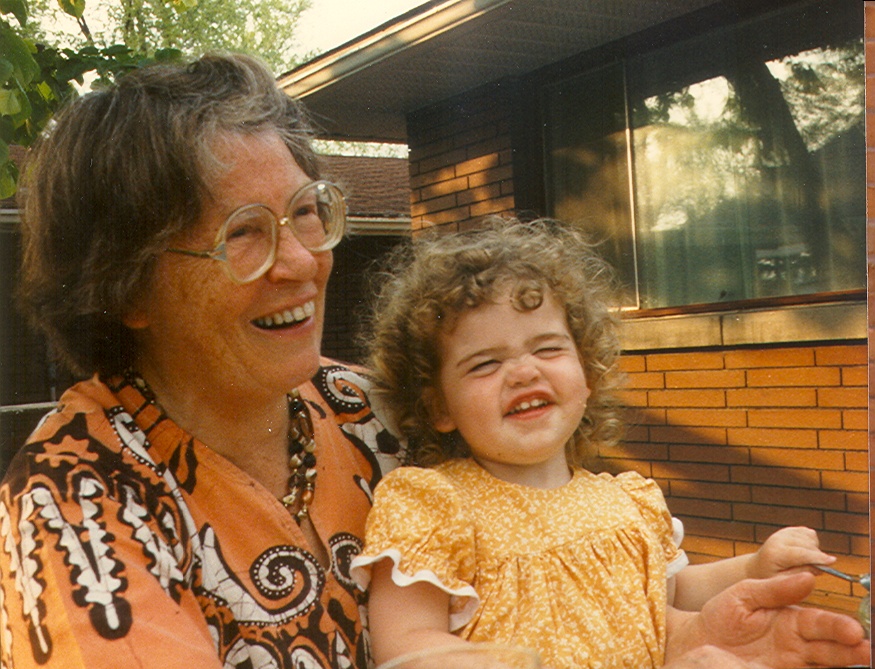
At the risk of displaying maudlin sentimentality, I'll celebrate what would have been Wendy's 87th birthday by posting a grab-bag of photos of Wendy, many of which show the lovely smile that so often lit up her face and all her surroundings.


Sunshine, spring blossoms and an engagement ring, August 18, 1956


Just married, February 14, 1957


Signing the marriage registry, St Peter's College chapel, February 14, 1957


Toddlers Rebecca and David waving to a ship on Sydney Harbour, 1960


Gondola in Venice, July 1969


Toasting each other at David's wedding, 1983


Ironing the Christmas skirt, 1983


Rail pass travel in Europe, c 1986


30th Wedding anniversary, February 14 1987, at Sydney's best seafood restaurant


Wendy with her niece Anne Wendelken,
Wellington, New Zealand, 1987


With our first grandchild, Ottawa, autumn 1988


Can Cun, Mexico, 1989


Shinkashen (Bullet Train) Tokyo to Morioka, 1991
Oban-Mull ferry, western isles, Scotland, 2003


Cutting the birthday cake, Oct 14, 2005


With David at 80th birthday party, Jack Purcell Community Centre, October 14, 2005


Christmas Day, 2009


What happy memories these (and innumerable other) photos evoke!


Thursday, October 11, 2012

Joseph Anton

Time off from memoir-revising, I've been stretching my mind to absorb Joseph Anton, Salman Rushdie's big fat memoir, ostensibly about his years living under the Fatwah, the order to exterminate him, issued by the Islamist fanatic leader of Iran, the Ayatollah Khomeni.  It's about far more than the time Rushdie lived a shadowy existence in safe houses under an assumed name he chose himself, Joseph Anton, the first names of two favourite writers, Conrad and Checkov.  This is such a splendid memoir that I'm discouraged and encouraged. I'm discouraged because my own efforts are so shallow and inadequate in comparison. And I'm encouraged because I can see ways in which Rushdie's memoir can be a template for my own feeble attempt to record and learn lessons from my life.   Salman Rushdie has written a profound book not just about that long interlude in the half-world of constant fear, police protection that he never completely trusted, and shunning centre stage which to such a supreme egotist was a real punishment. It's about the whole of his life, his stormy relationship with his father and a succession of wives and lovers, his interactions with literary agents, publishers, other writers, public intellectuals, the often exotic places he visited. And of course it's about himself, manifestly his favourite subject. It's probably self-serving because of this, but most memoirs probably are I suppose.  It's written in the third person, which is an interesting literary technique. One lesson I take away from my reading of this fascinating book, is that my own memoir can be longer, more discursive, more introspective, more seeking deeper truths than I've made it so far.  It follows that instead of just a few months more of work, I probably have a few more years.  So be it. It will keep me off the streets and provide many more hours, weeks, months of entertainment than I'd begun to expect. The advantage of this is the greater time that will elapse before I finish the work and have to begin asking myself the troublesome question, "Now what?" 

Tuesday, October 9, 2012

An exception to the usual rule

As a postscript to my comments about the platonic, collegial mood that prevailed at our tennis parties, one couple conspicuously departed from that generalization. They weren't regulars. I'd known her for years but she was on the fringe of my friendship network and played tennis at my home only a few times. She was a strikingly beautiful girl, whose photo appeared from time to time on the social pages of  newspapers and magazines. I'd felt flattered rather than patronized when she accepted the invitation to play tennis at my place. The other half of the couple was a married man whose wife was near delivery of their first baby, was there for the first and as it turned out, only time. He was invited by one of my friends, to get him out of the house while his wife and her sisters got a nursery ready for the baby. At the end of the day's tennis when dusk descended the rest of us moved inside for refreshments, but these two stayed on the veranda deep in conversation. My Auntie Doris was in bed a few feet away through the open window and heard every word which she relayed to my mother who passed on a few choice bits to me, including "My underwear is in the way; I'll take it off."  It was the start of a scandalous affair. A gossip-mongering friend of my mother reported a sighting in a hotel in the Adelaide Hills where they had evidently stayed together overnight. Several weeks later she unexpectedly dropped out of sight, went interstate and did not appear again in Adelaide for many months. The rumour mills worked overtime: she had gone to Sydney to have an abortion; to Melbourne to have a baby that was immediately put up for adoption. When she reappeared she did not rejoin the social set in which previously she had been prominent.  A few years later when we were both working in London I took her out a few times. I tried to ask about her abrupt departure and prolonged absence from Adelaide but she deftly deflected my questions. As for him, his marriage broke up; he has been an air force pilot during the war and returned to flying as a pilot for a rather shady company that carried freight between Australia and the Pacific islands. Not for long, however. He was caught smuggling drugs into Australia and sentenced to a long stay in prison. I was reminded of this sad story by seeing her in one of the tennis party photos in my previous post.

Sunday, October 7, 2012

Medical student life, 1944-49


Here are a few brief excerpts from a longer account of my medical school years in Adelaide, 1944-49

In February 1944 when I was not yet 17½ years old, I started "first-year medicine" at the University of Adelaide. This was a premedical year - physics, chemistry, botany, zoology. It was intended to weed out the unworthy and to orient to biological science those like me with no prior exposure to these disciplines or their terminology. It was very necessary for me  so I could learn the bewildering technical jargon of the biological sciences. This was new and strange enough to cause me such difficulty that in the term examination in botany with all its exotic terminology, I achieved the lowest mark I have ever recorded, 4%; I was depressed about my prospects of ever being able to understand what was going on, let alone mastering enough to pass an examination. Fortunately, after a year of dissecting dogfish, gazing at strange patterns of cells and tissues through the lens of a microscope, and listening to interminable lectures (many read from textbooks at dictation speed) enough facts and understanding penetrated my brain and I was able to scrape through and move on to the second year, when the real medical course began with anatomy, biochemistry and physiology.

Cloisters in Student Union building, University of Adelaide, c1945

Adelaide University had some competent and famous scholars in the disciplines that made up those first year courses. Our professor of physics, Kerr Grant, a lovable man with a cleft palate, was the survivor of a team that had included William and Lawrence Bragg, father and son, who were Nobel laureates in physics earlier in the century. The department of zoology was headed by Sir Douglas Mawson, a famous Antarctic explorer, who lived near our old home at Brighton; his daughter's PhD dissertation had been on the rectal parasites of penguins, about which she tried vainly to teach us. In the department of botany (later at the Waite Agricultural Research Centre) was Leonard Marsden, who became famous for his discovery of trace element deficiencies in soil that impaired the metabolism of plants, including those vital to the growth of sheep and cattle. All this erudition was wasted on our pragmatic medical student classes.
  
In our second year we were joined by several ex-servicemen, raising the number in our class to an unprecedented 60, including a record number of women, 15. No medical student class ever before in Adelaide had exceeded 45 students nor had more than 3 or 4 women; all the ‘men’ agreed it was a waste of rigorously rationed medical school places, as these frivolous ‘girls’ would marry and drop out of medical practice. In those days we were strident male chauvinists. In fact, 40 years later all but one or two of the women were still active, and a higher proportion than among the men had become distinguished specialists in fields that include neurosurgery, plastic surgery, anesthetics and radiotherapy. The men included three who died young and violently within five years of graduating - by suicide, drug overdose and traffic injury that was as near self-inflicted as semantics permit. We were joined too by several Western Australians; there was then no medical school in that state, so students from the West aspiring to a medical career had to travel to Adelaide or even further to Melbourne or Sydney. My mother rented our former maid's room to one of them, and later when he moved to the University residence of St Mark's, she rented to one of the ex-servicemen.

Anatomy was hard grind but biochemistry, taught without perceptible attention to underlying theories or principles, was worse. We “learnt” about the Krebs Cycle, the basic principle of carbohydrate metabolism, not by rationally grasping and understanding the principles, but by rote learning. Only physiology, under benign guidance, was enjoyable and seemed to have a rational underlying basis of natural laws like the principle of homeostasis that made sense. Our professor of anatomy was an active research worker with little interest or competence in teaching. Our real anatomy teachers were young medical graduates almost all en route towards surgical careers, keen to enhance their understanding before taking the anatomy examination that was part of the primary FRCS they all required. All but one: the exception was Ross Adey, who became an eminent neurophysiologist and medical scientist, illustrious enough to have been nominated for the Nobel Prize. Ross taught me most of the anatomy that stuck to my brain long enough for me to pass the examinations and proceed on to the clinical years, though it was a close run thing because of the combination of poor comprehension and my distraction from study by extracurricular interests, of which more below.  Many years later Ross Adey and I were expert witnesses in a class action suit against a Californian electric power corporation being sued by people who claimed that low intensity radiation from high voltage power lines caused a cluster of cases of child malignancies. Ross presented the neuropathological evidence, I summarized what was then known about the epidemiological evidence, which was circumstantial and suggestive.

The war ended when I was in my second year. We had a spectacular celebration on VE Day, with an impromptu procession through the streets of Adelaide led by an open touring-car remarkably like one frequently seen in newsreel shots of the commanders of the North African campaign. It contained a uniformed officer who bore an uncanny resemblance to the war hero General Bernard Montgomery. This man was a student, an amateur actor, skillfully made up; he fooled much of the population of Adelaide, some of whom really believed that General  Montgomery was leading our victory celebrations. The second victory celebration when the Japanese were defeated in August 1945 was more subdued. The implications of the fact that the Japanese had capitulated after atomic bombs had destroyed two of their cities, were not lost on some of us. Although we felt profound relief that the war was over and most of us felt vengeful towards the Japanese who were getting their just deserts after the atrocities their soldiers had committed, some of us, myself included, had misgivings about this new weapon, reinforced by Albert Einstein’s words when these appeared in our newspapers. We realized that something terribly important had changed forever in the world we lived in.   

I was becoming increasingly aware of the world I lived in at that time. I avidly read news reports and commentaries in our very parochial local newspapers, and in international magazines from Britain and the USA that were available (weeks after they were published) in our local library. When I was in the third year of the medical course I started subscribing to the New Yorker, which I continued for the next ten years or so, and read its excellent articles on the world’s problems, which broadened my horizons immensely. I became increasingly aware of and sensitive about many of these problems. I still have the issue for August 31, 1946, which was entirely devoted to John Hersey’s account of the survivors of the first atomic bomb dropped on Hiroshima.  On the troubled Middle East, I well remember arguing with a classmate about the establishment of Israel; he had served in the Middle East, and was full of admiration for what the Zionists were doing to convert Palestine into a fertile land flowing with milk and honey. Despite my partially Jewish origins, I was deeply concerned about the morality of handing over this land to usurpers who were ejecting by force the families who had lived there for innumerable generations. The bloodshed and oppression of the Palestinians that have followed the formation of Israel in 1947, and the transformation of the Israelis into the international thugs of the Middle East, seem to me now to support the position I argued back in the days just after the end of World War II, when I could see though my classmate could not, that more wars would be caused by the decisions that the new United Nations General Assembly and Security Council were taking in those years I spent getting my clinical training. My Jewish Uncle Lester had a friend, a rabbi I think, who had come back from the Middle East with horrific stories, including one about a massacre he had witnessed, in which a Palestinian family had been brutally slaughtered by the Zionist soldiers (we call them death squads nowadays) who founded the nation-state of Israel. He and Uncle Lester agreed that ultimately no good could come from the violent and brutal founding of a homeland for the Jews in the place where their distant ancestors had lived 2000 years earlier. It would have been better, they agreed, to establish a homeland for the Jews, if there had to be one at all, in Argentina or in the good farming country of Western Victoria.

I actively disliked much of the medical course. It was drudgery and mindless rote learning, taught by pedants. We had no academic clinical departments or professors in those days. The first professor of medicine was appointed the year after I graduated, in time for Peter but not me to benefit from the stimulus he provided. Our clinical teachers were “honoraries,” doctors in private practice who donated a few half-days every week to their charity wards. They varied in quality but hardly any knew how to teach or had the ability to inspire students. Only a few were clinically competent. As I’ve famously said, it took my brain at least five years to recover from the damage inflicted on it by my medical “education.”

One or two of the clinical teachers could guide selected (that is, favourite) students to a level of clinical competence comparable to that achieved by students in good medical schools. Others such as Adelaide's most eminent surgeon, were third rate authoritarian pedants. In my time the University of Adelaide medical school was in a period of decline and stagnation, between a low peak of mediocrity in the 1930s and a higher peak of above-average quality in the late 1950s and subsequently. I spent a great deal of my time in medical school studying entirely non-medical matters - history and English literature in particular. I aspired to be a writer. I was active in writing and helping to edit the university magazine, Phoenix, in which a couple of my short stories appeared. I wrote anonymously (for 3 guineas apiece!) two short stories, now lost without trace, for Men Only, a men's magazine. The loss is inconsequential, those stories are best lost and forgotten, they were awful! I discovered Mary Martin's bookshop, then a small hole-in-the-wall establishment on an upper floor of a building in a lane off Rundle Street, later in its glory days, a grand emporium of books occupying a whole floor in an air-conditioned office building near its original site. Mary Martin was a little brown-skinned woman, Anglo-Indian I think, an arts graduate of the University; the main attraction was Max Harris, Adelaide's enfant terrible of literature, a flamboyant man of letters. He founded the literary magazine, Angry Penguins, which published poems, stories, and literary criticism. Angry Penguins and Max Harris were the targets of a famous literary hoax, when they accepted and published the “posthumous poems” of an entirely imaginary literary genius, Ern Malley, sensuously erotic (for those times) blank verses that were a literary sensation for a few weeks until the hoax was revealed; at the same time the police laid charges of obscenity against the publisher, who was Max Harris. All this happened after I had become a regular fixture at Mary Martin's, drinking coffee, exchanging stimulating conversation with a miscellaneous collection of artists and aspiring artists - most of whom, like me, never got anywhere in the world of arts and letters. There was a film club too, at which we saw the great movies of that and earlier times - the films of Sergei Eisenstein, Max Ophuls, John Ford, Alfred Hitchcock, John Grierson and of course, Orson Welles' Citizen Kane, which I saw the week it opened in Adelaide, probably early in 1944, three years after its original release. I became a semi-serious collector of books in those days, and still have some of the books I got from Mary Martin's, along with coffee and conversation, or from Beck's or other bookshops in and around Adelaide. I don’t think I would have survived medical school without those escapes from the grind of incessant study.

There was study too of course, a great deal of it. That was a masochistic period of sitting at my desk within earshot of thousands enjoying themselves. I could hear happy crowds on the beach a few hundred yards away as I sat studying; and in the evenings, the clack of lawn bowls and the conversation of the elderly bowlers on the bowling-green behind our house distracted me.

There's a good photographic record of tennis parties - though more than 60 years later I can't confidently identify all the players!


After the war ended, the air-raid shelter on the far end of the tennis court was done away with. I was thankful that this source of embarrassment, my mother's most ludicrous folly, was gone for good. It left a depression in that corner of the tennis court that took years to elevate to the same level as the rest of the surface, but it was close enough to the base-line so that it seldom came into play. There began then a series of memorable and happy Sunday afternoon tennis parties that punctuated the summer months during the last three years in medical school. These parties were regularly attended by fellow-students and others, including sundry young women, mainly nurses, and a few others who drifted in and out of the group. I went to the movies and occasionally to dances with several of these girls, but all my social encounters were strictly that, totally social, totally non-sexual. Looking back, I wonder whether I was under-sexed or merely naive. Yet comparing notes years later with others who belonged to that social circle, I discovered that they too were wholly innocent in those days. I think we may have been unusual compared to many in that age group at that time.

Of course it was before the Pill, before the era of sexual emancipation. Our tennis parties and other social activities remained platonic at least until we were in our final year, when several began experimenting a little more boldly, and engagements and weddings began to occur. In my case, sexual exploration consisted, when I was past my 21st birthday, of actually feeling a girl's breasts for the first time in my life; and that, for some years, was as far as my sexual life ever got. But we all had a great deal of fun and many very happy times, memorable occasions that are memorable not least because of their innocence and ordinariness.

Our horizons were limited by the shortage of petrol which was still rationed until a couple of years after the war ended. By then my Auntie Doris had come to live with us. She lived in the front room off the veranda, the room that had been our sitting-room; she had cancer and soon became bed-ridden. She had a little car, a Ford Prefect; and by default this became my wheels, providing my means of escape once petrol rationing ended. That was when I was in my final year, and I didn't get the car very often because my mother also used it instead of her own. Now at last I was able to do what young men of spirit aspired to do - take girls out in the car, and sit smooching with them in the back seat, looking down from the hills on the lights of Adelaide on balmy evenings. But I was unadventurous by the standards that seem to have existed at that time according to popular fiction and Hollywood movies about those times.
A beery excursion to the Flinders Ranges north of Adelaide in about 1948


A few times late in our medical student days, some of us went uninvited to parties, and one of those provided me with what may have been the most romantic episode of my life at that time. The party was somebody's 21st birthday celebration, and it was irretrievably dull. I was talking quietly to a young woman, probably a few years older than I, in a corner. On the spur of the moment, we decided to leave, and drove up into the hills in my car. We left the party about 10.30 pm, and drove to the lookout just below the summit, where we sat talking - reconstructing the universe, talking of books we had read, movies we had seen, our favourite music, things we liked to do. There was no sex, just wonderful stimulating conversation till the small hours near dawn, when I took her home and deposited her safely on her doorstep with just one chaste goodnight kiss. I didn't even know her name, and I never saw her again. What a pity that was! Of all the people I had ever met, this was perhaps my true soul-mate.

In residence - I think during our final student year

Monday, October 1, 2012

A Writers' Workshop

Susan Jennings, seated front middle in this photo, current President of Ottawa Independent Writers, organized and ran a very successful, very productive workshop for writers that ran from last Friday afternoon to yesterday, Sunday. I felt the symptoms of an impending respiratory infection so I left a couple of hours before it was over; I'm glad I did because penetrating rain later in the day would have made the drive unpleasant; moreover, timely medication from my bathroom cabinet may have nipped my symptoms in the bud - I'm feeling much better today.

The workshop took place at the Galilee Centre in Arnprior, an aesthetically more pleasing venue than the Marguerite Centre in Pembroke, which is larger, more institution-like, less cosy, less suitable for thinking beautiful thoughts.  It's less than an hour's drive from Ottawa, which is an added attraction. The drive to Arnprior on a lovely sunny autumn day with the brilliant seasonal colours beginning to inflame the trees, was delightful, and I arrived in time to stroll through the little park on a rise above the confluence of the Ottawa and Madawaska Rivers, where the Ottawa River is about a kilometre wide, and - although there are wild rapids nearby - flat calm and on a windless day, surface like a mirror reflecting the brilliant fall colours that are beginning to appear on both the Ontario and Quebec sides of the river.
The view from my window at the Galilee Centre, looking north over the Ottawa River to the Quebec shore about a kilometre away


The company was excellent.  All but one of us (who left early, also with a respiratory infection) are in the photo above. Most are associated with health care, probably a coincidence, and the majority, like me, are writing or have written memoirs rather than creative fiction. When I was about 12-13 years old I wanted to be a writer, and decided on a medical career partly because several of my role models from that time had escaped from medical careers into writing. I made the sad discovery by the time I was about 16 that I couldn't invent plots or create believable three-dimensional characters, and had a tin ear for dialogue. So creative writing was not a realistic career path. Fortunately by then I had discovered that a medical career held many other fascinations. My colleagues at this weekend's writers' workshop are not hampered by my shortcomings. Listening to their readings of excerpts of their imaginative work I felt humbled by their manifest superiority at creative writing. Several have written stories that are based on fact thinly disguised as fiction.  I admire enormously their ability and imagination that is enough to write believable dialogue into their compositions.  I've tried to do this but failed miserably so far.  Now, inspired by my colleagues at the workshop, I will try again.

As readers of this blog know,  over the past year or so I've been posting abridged excerpts of my memoirs and also some of my traveller's tales, often illustrated with photos.  I feel inspired now to focus more on licking the memoirs into final shape and aiming to publish them as an e-book, as early as I can manage in 2013.  I most warmly welcome comments from any of the several hundred readers of this blog: if you feel impelled to comment, whether to encourage me or to tell me to forget it and take up stamp collecting instead, I will be most happy to hear from you, whether in a public comment or - as most are - a private and personal email direct to me.